

Japanese Prime Minister Sanae Takaichi officially announced on May 25 a supplemental budget exceeding ¥3 trillion for fiscal year 2026. The emergency package aims to address rising prices and economic disruption caused by prolonged instability in the Middle East.
Government officials say Takaichi was particularly concerned about avoiding additional turbulence in Japan’s bond market while preparing the package. The government plans to finance the budget using deficit-covering government bonds, but only within the range of previously authorized bonds that ultimately remained unissued.
Speaking at a press conference at the Prime Minister’s Office, Takaichi stated:
“Due to stronger-than-expected tax revenue and unused expenditures, a portion of previously planned special bonds will no longer need to be issued. We can therefore reallocate those resources without increasing total bond issuance.”
The statement was designed to reassure investors and demonstrate fiscal discipline despite the expansionary spending measures.
Takaichi also emphasized that the government would continue closely monitoring market conditions and economic indicators in order to maintain fiscal sustainability and preserve market confidence.
Behind the scenes, however, government insiders revealed that Takaichi had initially considered a larger package worth around ¥3.5 trillion. The Ministry of Finance reportedly worked intensively to secure fiscal resources while minimizing the appearance of new debt expansion.
The final solution involved redirecting approximately ¥3 trillion worth of deficit-financing bonds from the previous fiscal year that became unnecessary due to higher tax revenues and reduced spending.
According to a senior economic official:
“The government wanted a method that would reduce psychological pressure on the market. Using already-authorized bonds makes the policy easier to explain publicly.”
Two major concerns reportedly shaped Takaichi’s decision-making process.
The first was the sharp rise in Japanese government bond yields. On May 18, after reports of a possible supplemental budget emerged, yields on newly issued 30-year bonds climbed to 4.2%, the highest level on record. Ten-year bond yields reached 2.8%, their highest level in nearly 30 years.
The second concern involved media coverage surrounding the ongoing naphtha shortage crisis. Although the government continues insisting that domestic supply remains secure, companies have already begun changing packaging designs, adjusting production, and preparing for shortages in petrochemical materials.
Sources close to the administration say Takaichi has grown increasingly frustrated with media reporting.
“She believes the government is trying to reassure the public, while the media focuses primarily on visible signs of crisis,” one official explained.
There are also fears inside the administration that emphasizing the use of deficit-financing bonds could once again trigger instability in Japan’s debt market.
Despite efforts to minimize both political and financial fallout, members of the ruling Liberal Democratic Party acknowledge that fiscal pressures are likely to intensify.
A senior LDP lawmaker commented:
“Even if the government uses previously approved bonds, public spending is still increasing. Eventually, Japan will need a serious debate about how future policies will be funded.”
Financial analysts say the strategy helped calm immediate market concerns but warn that far greater challenges may lie ahead.
Eiji Doke, chief bond strategist at SBI Securities, stated:
“It became very clear that the prime minister is deeply concerned about rising long-term interest rates. The decision helped stabilize the bond market for now.”
However, he also warned that Japan still faces enormous funding challenges related to economic growth investments, crisis management spending, and possible future financial contributions tied to U.S. military operations involving Iran.
Analysts caution that if future stimulus measures are once again financed through deficit bonds, market reactions could become far more severe.
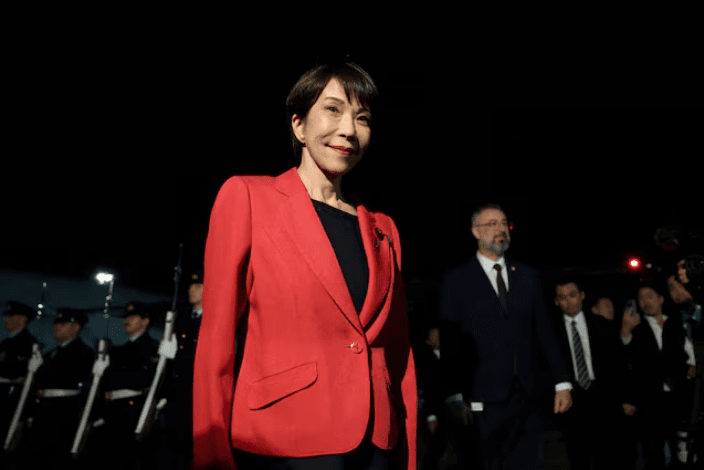
Photo: Prime Minister Sanae Takaichi photographed during an official visit in Canberra on May 3.
Credit: REUTERS/Hollie Adams